
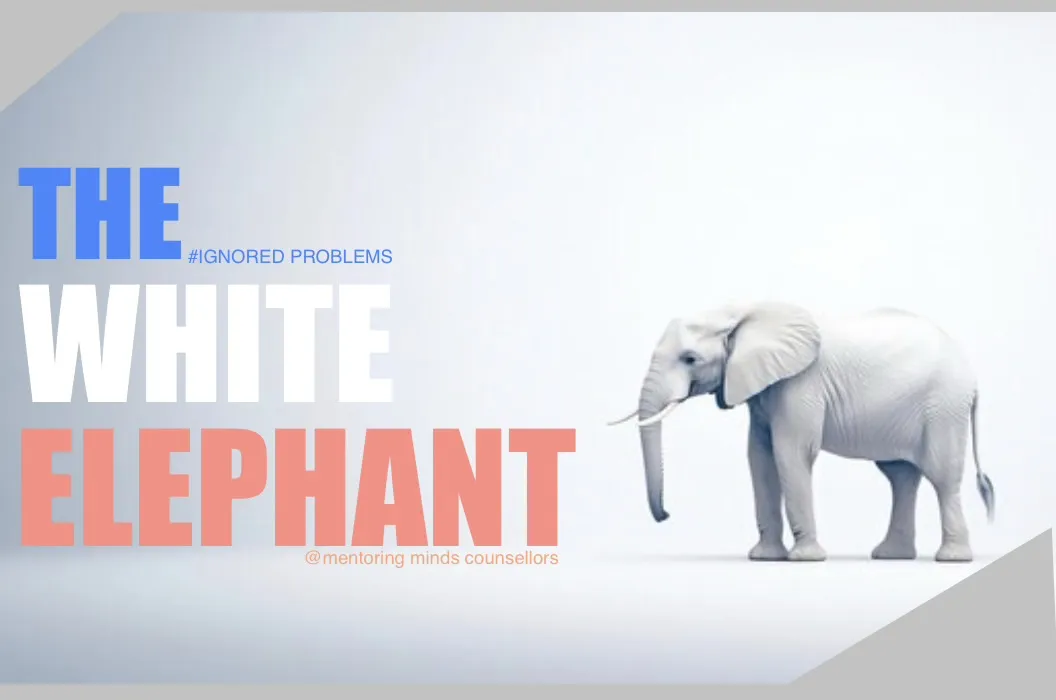
The White Elephant represents the ignored emotional wounds, unresolved conflicts, unspoken fears, and uncomfortable truths we quietly carry within ourselves or families, relationships, workplaces, and even societies.
Ignoring a problem doesn’t make it disappear. It only makes it heavier.
What Is the Psychological White Elephant?
The psychological white elephant is an obvious issue that causes discomfort, stress, or emotional damage, but is deliberately avoided because acknowledging it feels too painful, risky, or overwhelming.
- A toxic relationship that everyone knows is harmful
- Childhood trauma brushed off as “it’s in the past”
- Mental health struggles hidden behind productivity or humor
- Family conflicts masked by silence and tradition
- Workplace toxicity normalized as “that’s how it is”
We see it. We feel it
Why Do We Ignore Obvious Problems?
Ignoring problems is rarely about laziness. It’s often about psychological survival.
1. Fear of Emotional Pain
Facing the truth may mean grief, anger, guilt, or shame. Avoidance feels safer than opening old wounds.
2. Fear of Change
Acknowledging a problem means something must change a relationship, a role, an identity. Change threatens familiarity.
3. Normalization of Dysfunction
When we grow up around chaos or emotional neglect, dysfunction starts feeling “normal.”
4. Conflict Avoidance
Some people are wired to keep peace at any cost even if it costs their mental health.
5. Social Conditioning
Messages like “Don’t complain”, “Be strong”, or “What will people say?” train us to silence ourselves.
How the White Elephant Affects Mental Health?
They show up as:
- Chronic anxiety or unexplained sadness
- Emotional numbness or irritability
- Relationship problems
- Low self-worth
- Burnout and exhaustion
- Psychosomatic symptoms
The mind remembers what we try to forget.
Signs You’re Living with a Psychological White Elephant
- You avoid certain topics or people
- You feel tense even when nothing is “wrong”
- You overthink but never act
- You justify unhealthy situations repeatedly
- You feel stuck yet afraid to move
- You say “It’s fine” when it clearly isn’t
If something keeps returning in your thoughts, it’s asking for attention.
How to Overcome the Psychological White Elephant?
1. Name It Gently
You don’t have to confront everything at once. Start by acknowledging it to yourself.
“Something here is hurting me.”
Naming reduces its power.
2. Understand Your Fear
Try to ask yourself:
- What am I afraid will happen if I face this?
- What have I been protecting myself from?
Often, awareness softens resistance.
3. Allow Discomfort Without Judgment
Healing is uncomfortable, but discomfort doesn’t mean danger.
You are allowed to feel confused, scared, or angry.
Small courage builds emotional strength.
4. Release the Need for Perfection
Problems don’t need perfect solutions.
They need presence, honesty, and compassion.
A Gentle Reminder
Ignoring problems is not weakness it’s often a learned coping mechanism. But growth begins when we realize:
What we avoid controls us. What we face frees us. The psychological white elephant doesn’t want to destroy you.
It wants to be seen, understood, and released.
Closing Thought
We at Mentoring Minds Counsellors understand that Healing isn’t about pretending everything is okay.
It’s about having the courage to say, “This matters, and so do I.”
Leave a Comment