
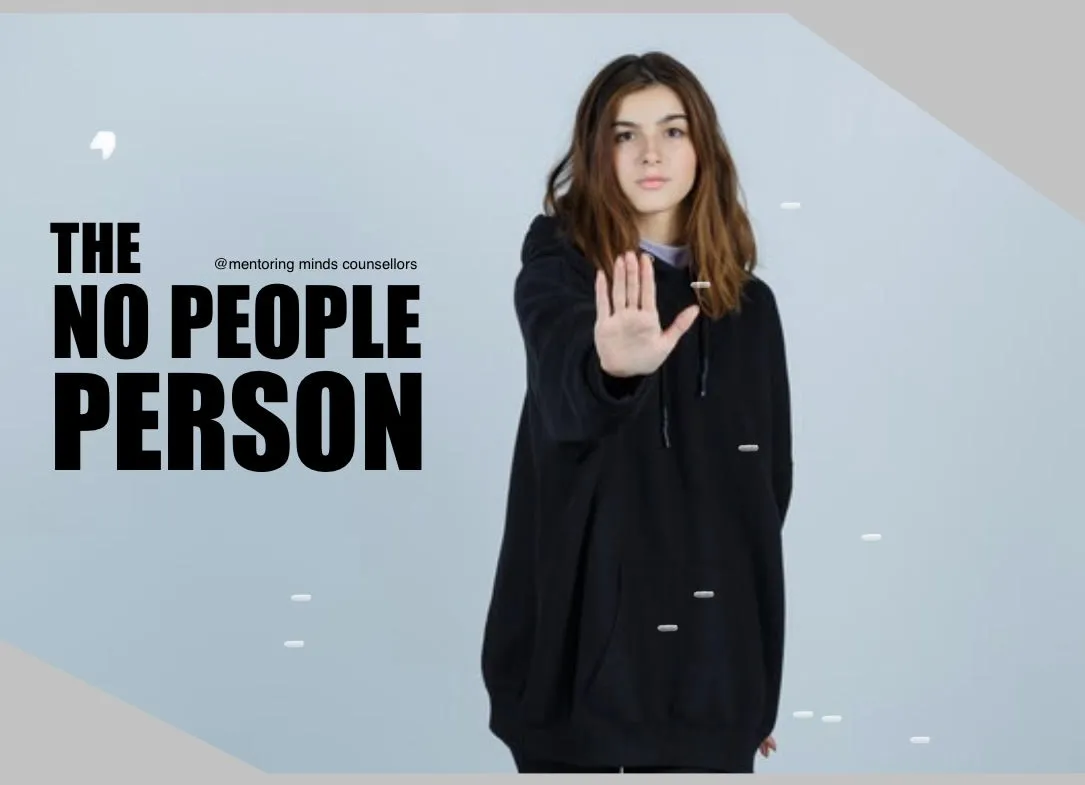
Someone who prefers a quiet corner over a crowded room. They keep conversations short, avoid office small talk, and would rather work alone than in a team brainstorm. These individuals are often labeled sometimes unfairly as “Not a people person.”
What is a “No-People Person,” really?
A “no-people person” isn’t someone who dislikes humans altogether. More often, they are someone who finds social interaction draining, unpredictable, or unnecessary. They may value independence, clarity, and control over the messiness of human dynamics.
In personality terms, they often lean toward:
- Introversion — gaining energy from solitude rather than social settings
- Low social drive — not naturally motivated to initiate or maintain frequent interactions
- High task focus — prioritizing outcomes over relationships
None of this is inherently negative. In fact, many such people are deeply thoughtful, observant, and capable of intense focus.
Why do some people struggle with “people”?
It’s not always about shyness. The reasons vary:
- Energy economics: Socializing simply costs more mental energy
- Past experiences: Rejection, conflict, or toxic environments can make interaction feel risky
- Skill gaps: Not everyone was taught how to navigate conversations, emotions, or group dynamics
- Preference for depth over breadth: They may prefer a few meaningful relationships over many casual ones
In short, it’s often less about disliking people and more about not feeling comfortable or rewarded in social situations.
The downside of staying this way
While being reserved has strengths, avoiding people entirely can create friction especially in work environments.
- Missed opportunities (networking, promotions, collaborations)
- Misunderstandings (others may perceive distance as arrogance or disinterest)
- Limited influence (ideas don’t travel far without relationships)
Even in highly technical roles, success often depends on how well you work with others, not just how well you work alone.
Can a “No-people person” become a people person?
Yes but not by forcing a personality transplant.
The goal isn’t to become loud, extroverted, or constantly social. It’s to become comfortable and effective in human interaction, while staying true to your natural style.
Think of it as building a skill, not changing who you are.
How to grow into a people person (without faking it)
1. Redefining what “people person” means
You don’t need to be the life of the party. A people person can also be:
- A great listener
- Calm in conflict
- Reliable and approachable
Start by aiming for connection, not performance.
2. Building small, repeatable habits
You don’t need dramatic change just consistency:
- Make eye contact and greet people
- Ask one simple question (“How’s your day going?”)
- Follow up occasionally
These micro-interactions slowly rewire comfort levels.
3. Focusing on listening, not talking
Many assume being social means talking more. In reality, listening well is more powerful.
One should Try:
- Letting others finish fully
- Reflecting back what they said
- Asking one thoughtful follow-up
People remember how you make them feel not how much you spoke.
4. Learning emotional cues
A big part of being a people person is reading the room:
- Tone of voice
- Body language
- Timing
This is a skill you can develop with awareness and practice, not something you’re simply born with.
5. Creating structure in social situations
Unstructured interaction can feel overwhelming. So:
- Prepare a few go-to conversation starters
- Set time limits (“I’ll stay for 30 minutes”)
- Take breaks when needed
This makes socializing manageable instead of exhausting.
6. Building relationships around shared purpose
It’s easier to connect when there’s a clear context:
- Work projects
- Common interests
- Problem-solving
You don’t have to “socialize” just collaborate, and connection often follows.
7. Accepting your limits
You don’t need to be social all the time. Balance is key:
- Schedule downtime after interactions
- Don’t overcommit to events
- Respect your natural energy levels
Growth doesn’t mean burnout.
THE REAL SHIFT
Becoming a people person isn’t about becoming someone else. It’s about removing the friction between you and others.
You don’t have to love crowds.
You don’t have to enjoy small talk.
You don’t have to be “on” all the time.
But if you can:
- Communicate clearly
- Show basic warmth
- Build a few strong relationships
You’ll find that the world responds differently to you.
Final thoughts
We at Mentoring Minds Counsellors understand that The “no-people person” isn’t broken or lacking. They’re simply wired differently. But in a world built on relationships, learning to navigate people is less of a personality change and more of a life upgrade.
You don’t need to become the most social person in the room.
Just someone others feel comfortable standing next to.
Leave a Comment