
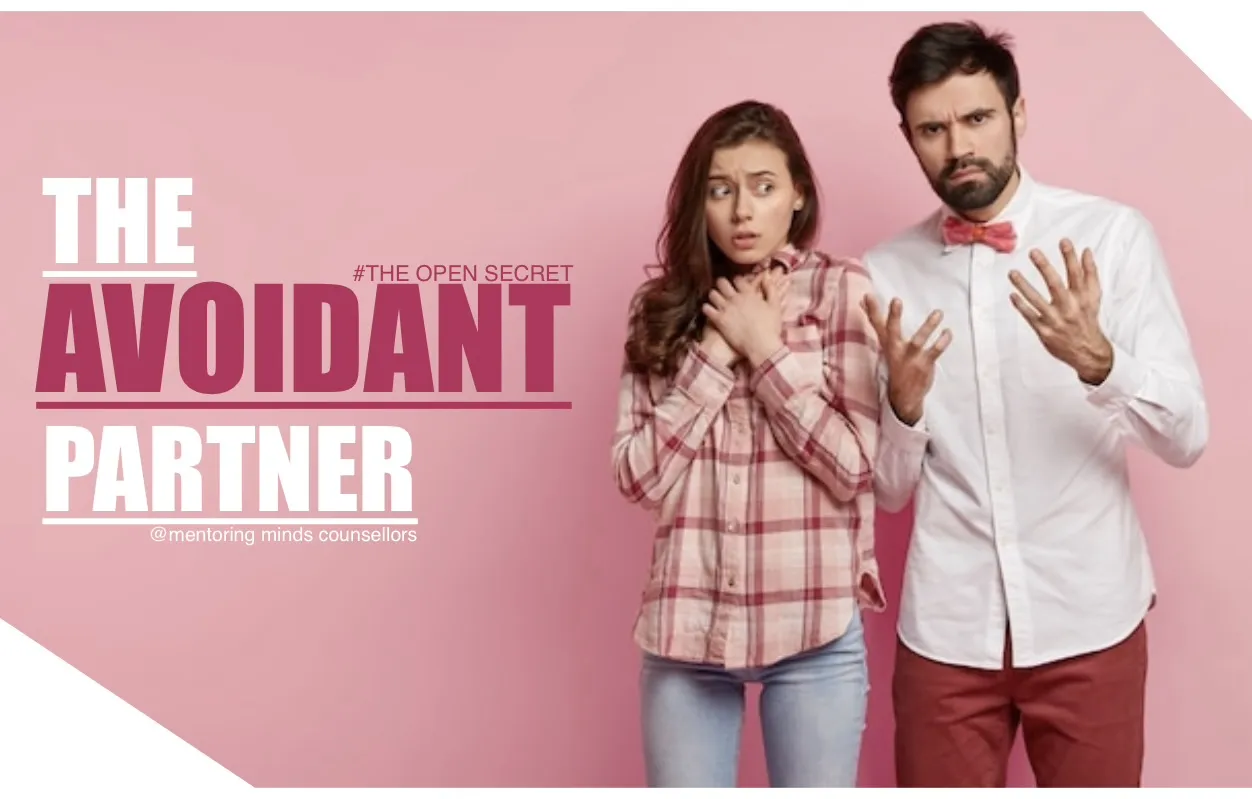
In many relationships, pain doesn’t always come from loud fights or obvious neglect. Sometimes, it comes from silence, distance, and the constant feeling that someone is there but never fully with you. This is where the avoidant partner often lives quietly, subtly, and in a way that everyone senses but few openly name.
Avoidant behavior in relationships is not rare, nor is it always intentional. Yet, over time, it becomes an open secret known emotionally, felt deeply, but rarely spoken aloud.
Who Can Be an Avoidant Partner?
An avoidant partner can be anyone. There is no specific gender, age, profession, or personality type that guarantees avoidance. However, certain life experiences and emotional patterns increase the likelihood.
But, what are those ????
1. Those Who Grew Up Emotionally Unattended
People who grew up in households where emotions were dismissed, mocked, or ignored often learn one lesson early:
“Needing others is unsafe.”
As adults, they may appear strong, independent, and composed, but intimacy triggers discomfort. They distance themselves not because they don’t care, but because closeness feels overwhelming.
2. Highly Independent and “Self-Sufficient” Individuals
Avoidant partners are often admired by society. They don’t ask for help, rarely complain, and seem emotionally stable. Independence becomes their armor.
But in relationships, this same strength turns into emotional inaccessibility. They struggle to lean in, to share fears, or to stay present during emotional conversations.
3. People Who Fear Losing Control
Emotional closeness requires vulnerability and vulnerability means surrendering control. For avoidant partners, love feels like a threat to autonomy.
They may pull away when the relationship deepens, delay commitment, or emotionally shut down when serious conversations arise.
4. Those Who Have Been Deeply Hurt Before
Past betrayal, abandonment, or emotional trauma can quietly shape avoidance. Rather than risk pain again, the avoidant partner chooses distance as protection.
Their logic is simple:
“If I don’t get too close, I can’t get hurt.”
How Avoidance Becomes an Open Secret
Avoidant behavior rarely announces itself. Instead, it shows up in patterns small, consistent, emotionally confusing patterns.
1. Everyone Feels the Distance, But No One Names It
Friends might say things like:
- “They’re just not very expressive.”
- “That’s how they are.”
- “They need space.”
The partner feels lonely inside the relationship, but outsiders normalize the behavior. The truth sits unspoken something is missing.
2. Love Is Shown in Actions, Not Emotions
Avoidant partners may provide, protect, and stay loyal, yet struggle with emotional presence. They may show up physically but not emotionally.
This creates confusion:
“They do so much for me… so why do I still feel alone?”
3. Conflict Is Avoided at All Costs
Difficult conversations are delayed, minimized, or shut down. Emotional needs are labeled as “drama,” “overthinking,” or “too much.”
Over time, one partner stops asking, stops sharing, and starts adjusting. Silence replaces honesty and the open secret grows.
4. Intimacy Has Invisible Walls
There may be affection, but not depth. Conversations stay surface-level. Emotional closeness feels limited, conditional, or brief.
The avoidant partner rarely says, “I need you,” even when they do.
Why This Pattern Is Hard to Confront
Avoidant partners are not cruel or uncaring. That’s why the pattern is so hard to call out.
They often say:
- “I’m just not emotional.”
- “This is how I am.”
- “I don’t know what you want from me.”
And because they are not overtly abusive or neglectful, their emotional absence gets excused by others and sometimes by their partner too.
Seeing the Truth Gently, Not Harshly
Understanding avoidance is not about blaming. It is about seeing clearly.
An avoidant partner is someone who learned to survive without emotional closeness and unknowingly carries that survival strategy into love.
The open secret exists because:
- Emotional absence is harder to prove than physical absence
- Society praises independence over emotional availability
- Vulnerability is still seen as weakness
But unspoken truths don’t disappear. They show up as loneliness, self-doubt, and unmet needs.
Final Thoughts
We at Mentoring Minds Counsellors understand an avoidant partner is not heartless. They are often emotionally overwhelmed, deeply guarded, and afraid of depending on anyone even the person they love.
Yet, love cannot thrive on distance alone. Emotional safety, openness, and presence are not luxuries; they are essentials.
When avoidance becomes an open secret, the most important question is not “Why are they like this?”
It is:
“Can I stay in a relationship where my emotional needs remain unseen?”
Leave a Comment